Portfolio Store
Painting portfolio inspiration

Painter Portfolio Examples: Five Ways to Present Your Art

See original sample artworks and practical project descriptions for an artist portfolio. Compare how a painting series, portrait, mixed media piece, still life and landscape can each tell a different story.

Original fictional artwork examples · No real artists or customer work shown

What should a painting portfolio show?

A strong painting portfolio helps viewers see the work first, then understand the medium, scale, series and intention. A collector may want to inspect one finished piece; a curator may look for a coherent body of work; a commission client may need to see how you handle a brief. Start with your best paintings and give each project just enough context to answer those questions.

Five sample projects

Painting portfolio examples you can adapt

These original, fictional works illustrate project presentation. Use the structure and explanatory ideas with photographs of your own art. They are not examples from Portfolio Store users.

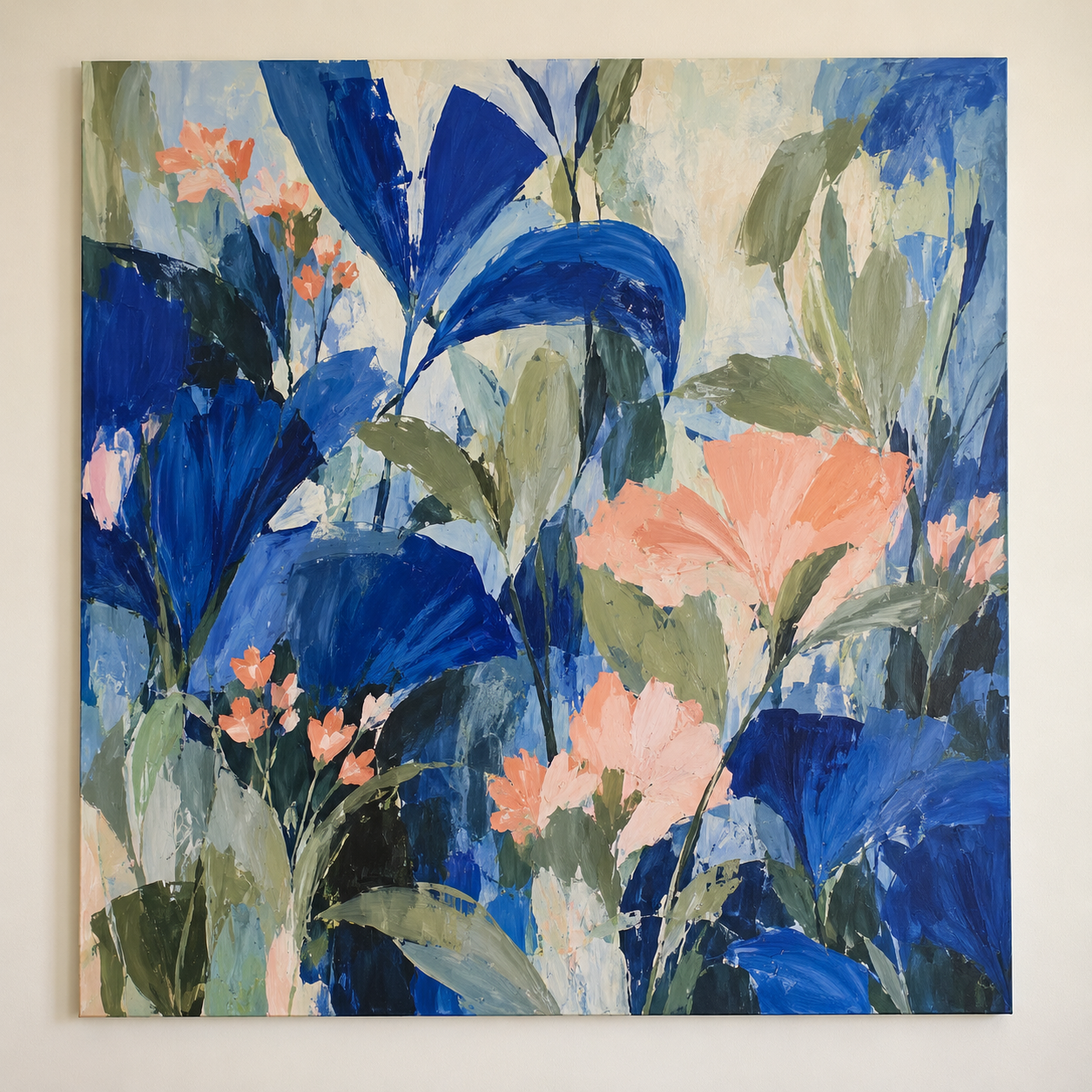
Fictional acrylic painting with cobalt blue and sage botanical forms on canvas
Acrylic · Series opener

Blue Hour Garden

Lead a cohesive painting series with its strongest finished work. Add the title, year, medium and dimensions, then describe the recurring palette or idea in two sentences.

Why it works: One clear image establishes the visual language before visitors explore the rest of the series.
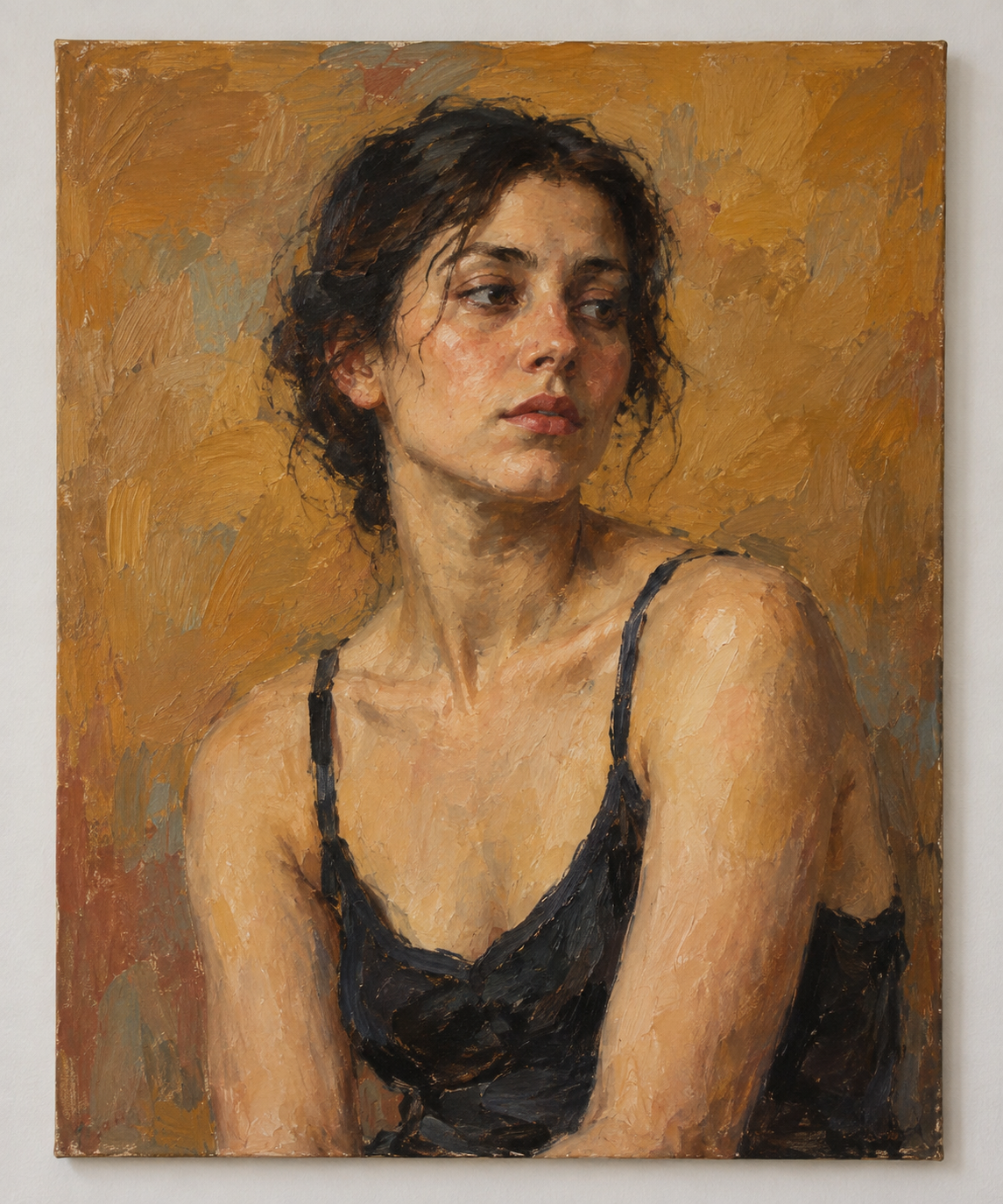
Fictional expressive oil portrait painting against a warm ochre background
Oil · Portrait commission

Portrait in Ochre

Show the completed portrait first. Follow it with a detail of the face or brushwork, and explain the sitter's brief, size and medium if you are seeking commissions.

Why it works: Prospective clients can judge your likeness, style and finish without searching through unrelated work.

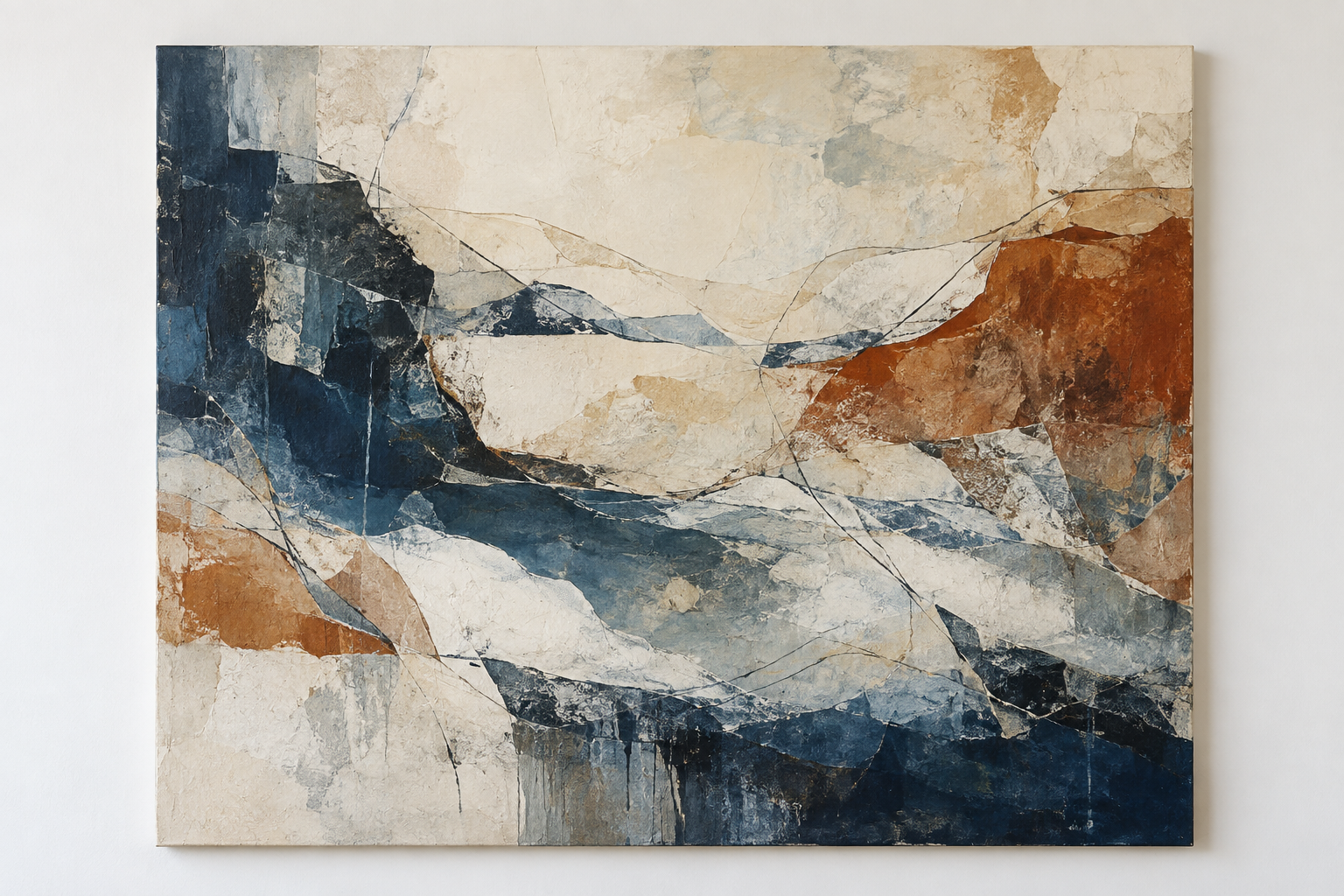
Fictional abstract mixed media painting in indigo, rust and ivory
Mixed media · Material study

Tidal Forms

Pair a full view with a close detail and identify the materials and surfaces. Describe the choice of texture and layering instead of relying on a list of media alone.

Why it works: The visitor understands both the composition and the physical qualities that a small screen can hide.

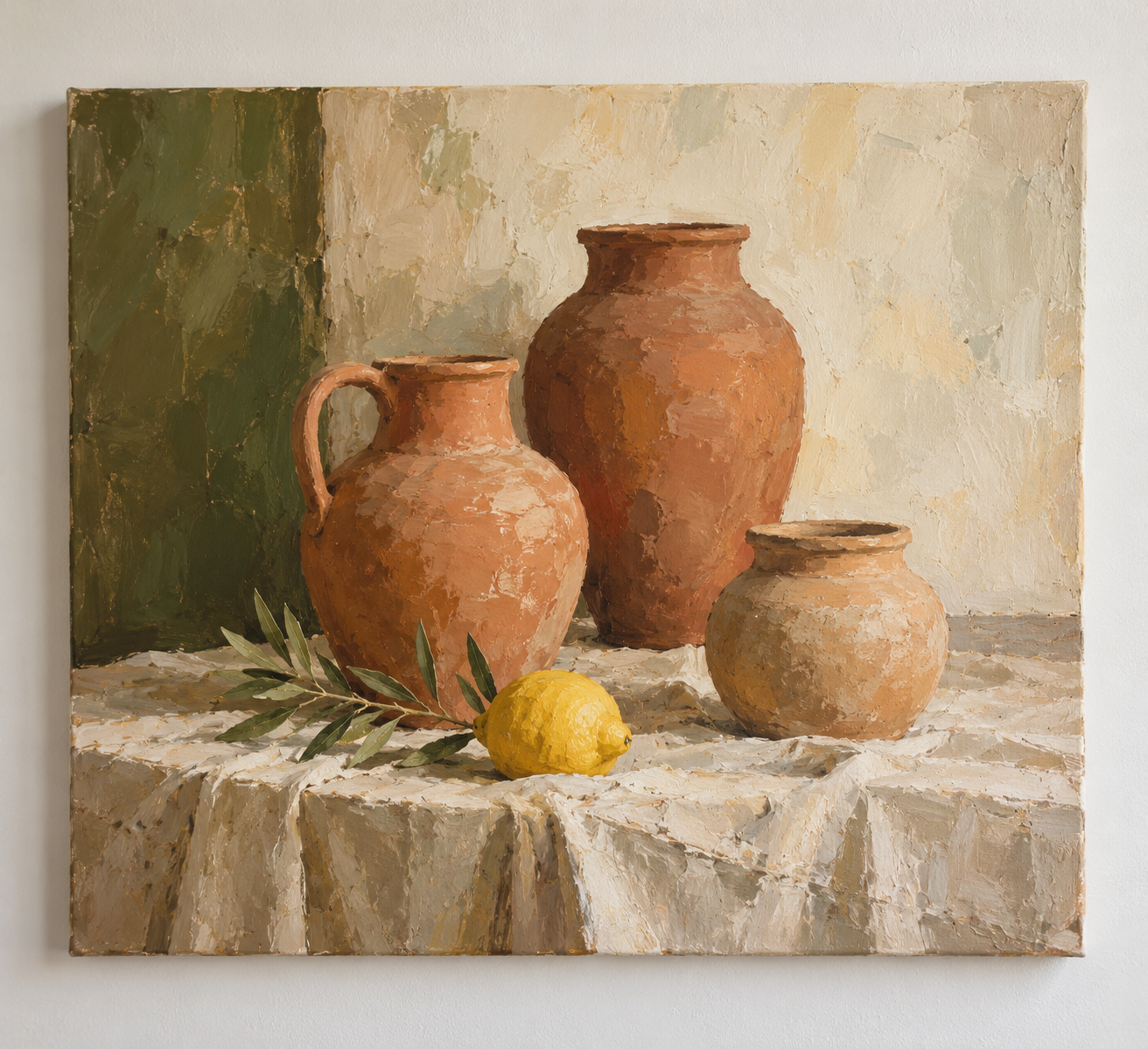
Fictional acrylic still life painting of terracotta vessels and a lemon
Acrylic · Still life

Terracotta Study

Group related studies into one project rather than making each sketch a separate portfolio entry. Explain your approach to light, color and composition.

Why it works: A focused sequence shows artistic decisions and development, not just a collection of images.

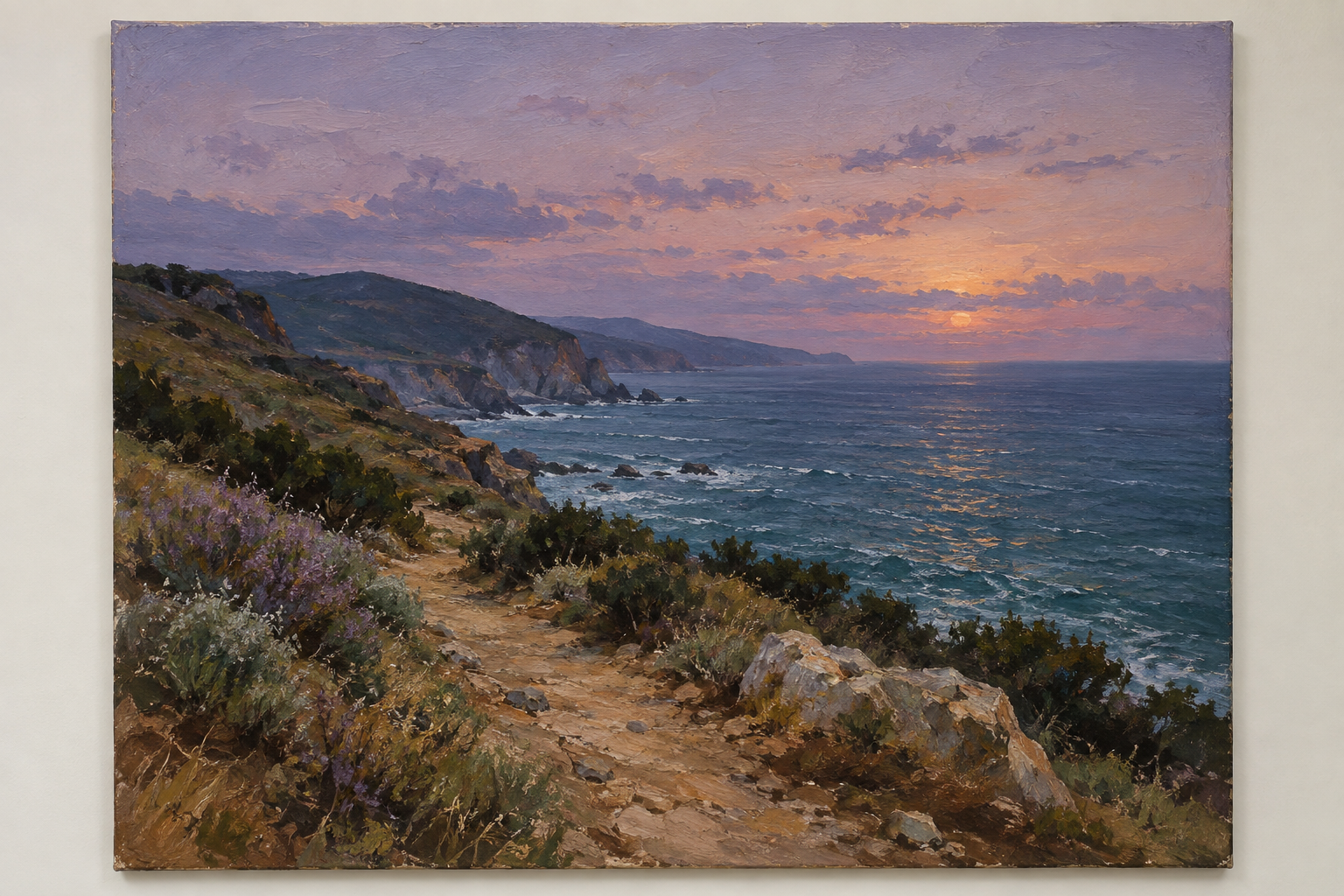
Fictional oil landscape painting of a coastal path and sea at dusk
Oil · Landscape series

Evening Path

Give the finished painting a clean opening image. Add a second view only when it reveals useful scale, surface or a connection to the wider landscape series.

Why it works: A concise project page keeps attention on the artwork while helping collectors understand where it belongs.

Turn these examples into your own artist portfolio

01

Choose a clear opening

Start with the type of painting you want to be known for. A tight selection is easier to remember than every work you have made.

02

Show the full work and a detail

Use consistent photographs, then add texture or scale views where they answer a real question about the piece.

03

Give the artwork context

Include title, date, medium and dimensions. For commissions, explain the brief and your approach without exposing client details.

For more on selecting and ordering work, read how to make a painter portfolio and the main painters hub.

Ready to share your paintings?

Make a portfolio with your own artwork, project descriptions and a link you can send to collectors, galleries or commission clients.

Portfolio Store Build your portfolio
Also available on
Get it on Google Play